
Cam Demkowicz. MFTC

Cam is currently only available for a January 2026 scheduling at this time. If you would like to be added to her schedule this next year, please continue with the scheduling process.

Credentials

  • Marriage and Family Therapy Candidate (MFTC)
  • Emotionally Focused Couples Therapy Externship (2024)

Hi there! I’m Cam, a Marriage and Family Therapy Candidate (MFTC) specializing in working with both individuals, couples, and families. I hold a bachelor’s degree in Human Services and Psychology from Purdue University, as well as a master’s degree in Human Development and Family Studies, with a focus on Marriage and Family Therapy, from Colorado State University.

As a trauma informed systemic therapist, I view the human experience as fundamentally relational—whether in our relationship with ourselves, others, or the systems we navigate. I see myself as a co-guide on your journey to exploring how these relationships interact with one another and have shaped each individual, couple, or family. It’s a privilege to meet my clients where they are, walking alongside them as they explore themselves more deeply.

I approach each person and relationship as uniquely beautiful, offering a strengths-based perspective while helping you identify areas in your life you’d like to change and the values motivating your desire for change. I use a gentle, direct, and warm approach to uncover these internal narratives, and I primarily draw on techniques from Emotionally Focused Therapy (EFT), Gestalt, Motivational Interviewing, Psychodynamic Therapy, the Gottman Method, and Mindfulness-based approaches.

Therapy Techniques and Focuses

Founded in attachment theory, this approach explores emotions and unmet attachment needs underlying reactions. With this approach, clients will develop healthier ways to regulate and communicate their emotions and needs leading to deeper connections to the self and others. For individuals, EFT can help to understand how early attachment relationships have impacted present day relationships and emotional well-being. For couples, EFT helps couples to de-escalate conflict cycles and create a secure and intimate bond. Founded in attachment theory, this approach explores emotions and unmet attachment needs underlying reactions. With this approach, clients will develop healthier ways to regulate and communicate their emotions and needs leading to deeper connections to the self and others. For individuals, EFT can help to understand how early attachment relationships have impacted present day relationships and emotional well-being. For couples, EFT helps couples to de-escalate conflict cycles and create a secure and intimate bond. 

This approach to psychotherapy emphasizes the here and now present-moment emotions. Gestalt philosophy sees people as complex and multifaceted, not limited or defined by a single trait, diagnosis, or label. 

This method is often used to support clients in exploring ambivalence in their lives. This person-centered approach empowers clients to define why and how they may want to change for themselves.

The psychodynamic approach supports clients in exploring their working through unresolved internal conflicts, often unconscious and rooted in early relationships, that may be contributing to present day distress. This is often done through examining external relationships and the therapeutic relationship.

This approach aims to de-escalate unhealthy communication strategies, increase intimacy, respect, and affection. Through this framework, we will explore common communication strategies that predict relationship breakdown, their antidotes, and move towards managing conflict and creating shared meaning as a couple.

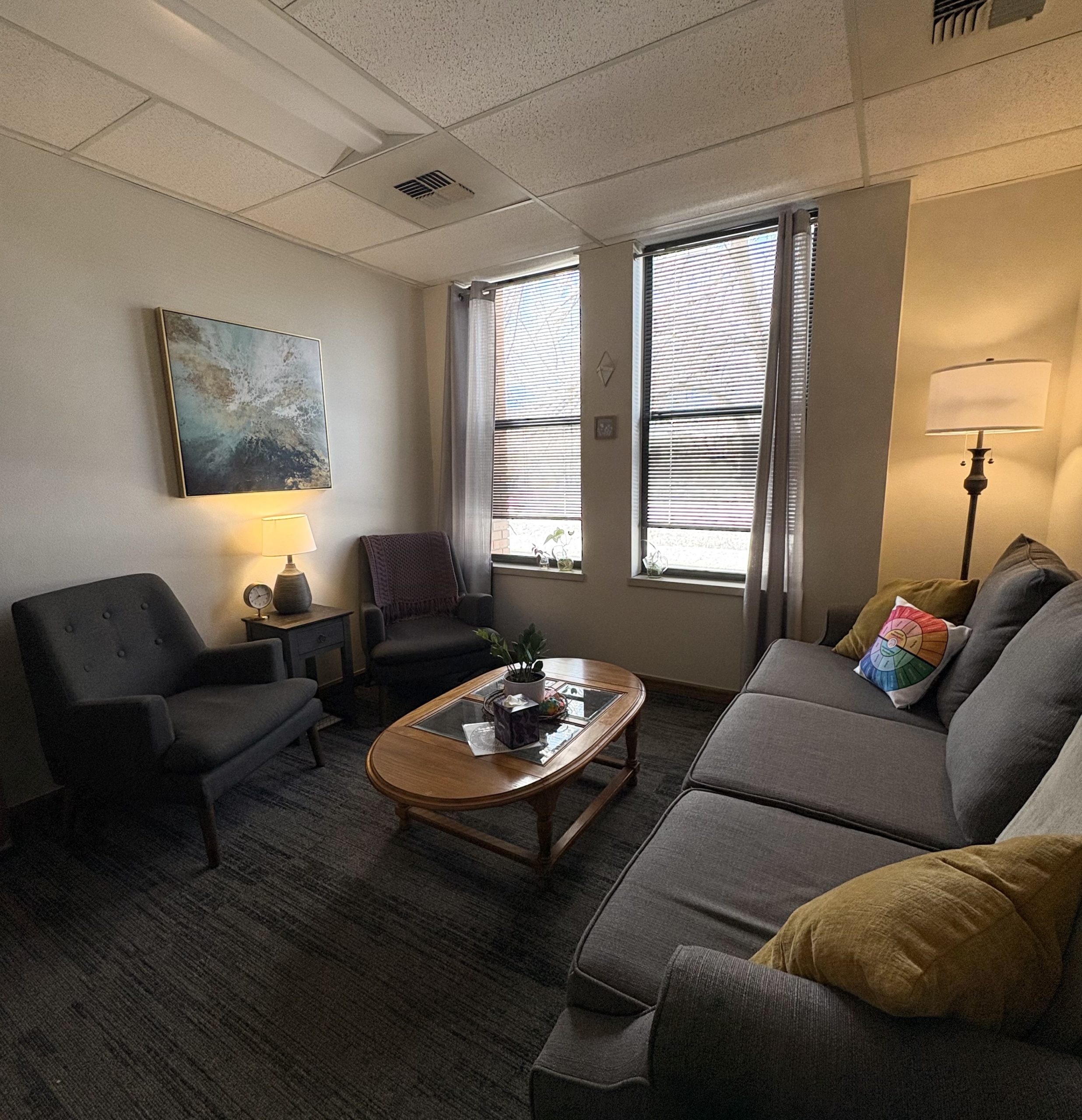
Session Space

“I believe that meaningful change is possible when we connect with the influences that have shaped us.”

-Cam